 by ICONES
Analytical control is not just for dose banding
“We only do compounded preparations, no dose banding. Analytical control isn't suited to our organisation.” It is a remark we regularly hear in hospital pharmacies. It is based on a misconception.
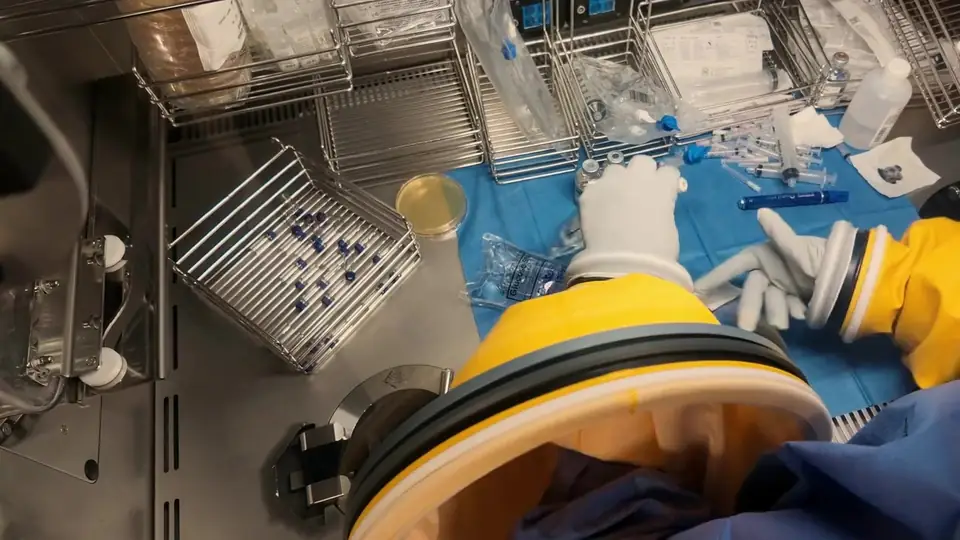
The misconception: analytical control is supposedly reserved for standardised preparations produced in series. In reality, it is exactly the opposite.
Dose banding and compounding: two approaches, one challenge
Before going further, let's clarify the terms.
| Dose banding | Compounded preparation | |
|---|---|---|
| Principle | Doses standardised in bands (e.g. 5-FU 850 mg, 900 mg, 950 mg) | Dose personalised for each patient, calculated individually |
| Preparation | Can be prepared in advance, in batches | Prepared on demand, for immediate use |
| Advantage | Simplifies production, reduces leftovers | Dose exactly suited to the patient |
| Risk of concentration error | Present | Higher (each dose is unique) |
Both approaches aim for the same goal: giving the patient the right molecule, at the right dose, in the right solvent. And in both cases, an error can have serious consequences.
Compounding needs more control, not less
This is the paradox: hospital pharmacies that do only compounding, and think they do not need analytical control, are precisely those where the risk of error is highest.
1. Every preparation is a unique case
With dose banding, the pharmacy technician repeats the same actions for the same doses. Standardisation reduces the cognitive load. In pure compounding, each IV bag has its own concentration. The technician moves from one calculation to another, from one volume to another, from one solvent to another. The cognitive load is at its highest.
2. Individualised calculations multiply the points of failure
Body surface area, adjustment for renal function, dose reduction for toxicity, rounding… Each calculation step is an opportunity for error. And these errors are hard to spot visually: an IV bag of 5-FU at 920 mg and an IV bag at 820 mg look strictly identical to the naked eye.
3. Visual double-checking lets 3 dose errors out of 7 through
The study conducted at Geneva University Hospitals (Carrez et al., 2017, J Oncol Pharm Pract) measured the effectiveness of visual double-checking in a simulation under real working conditions, using marker products instead of cytotoxics. The results are clear:
- of 7 errors made, only 4 were detected: 3 went unnoticed (a 43% failure rate);
- 40% of preparations deviated by more than 5% from the target dose;
- visual double-checking had no measurable impact on dose accuracy.
It is not a question of the teams' competence. It is a physiological limit.
These errors slip through the net not through negligence, but because the human eye cannot tell two similar concentrations apart in a transparent IV bag.
What BPP 2023 and the SFPO say
The 2023 Good Preparation Practices, published by the ANSM, do not impose a single method: the type of controls and the release strategy follow from the risk analysis of each preparation (points 1.9, 6.59 and 6.70). For chemotherapies, the SFPO recommendations go further: a check must be carried out for every preparation, and it is desirable to replace visual double-checking with analytical, gravimetric or digital methods (recommendation no. 17, 2019).
Neither the BPP nor the SFPO reserve analytical control for dose banding or large centres: SFPO recommendation no. 17 applies to all units. The SFPO goes even further, asking that release testing rely “as much as possible on new gravimetric, analytical or digital technologies” (recommendation no. 41).
Control methods in practice
Each method has its strengths, and its blind spots.
| Method | Strengths | Limitations |
|---|---|---|
| Visual double-checking | Simple, built into the flow | 4 dose errors out of 7 spotted in simulation (Carrez et al., 2017). No impact on dose accuracy |
| HPLC | Very accurate | A few minutes of separation per sample, one method per molecule, several hours for a series. Qualified staff and a dedicated laboratory. Hard to reconcile with the release flow |
| Video control | Visual traceability | Does not measure the final concentration of the preparation |
| Gravimetric control | Detects volume errors | Does not confirm the identity of the molecule. Limited accuracy for small volumes |
| Analytical control (QCRx®) | Verifies molecule, concentration and solvent in 70 s | Requires acquiring the system |
The finding: none of the first four methods can, on its own, certify in real time that the finished product contains the right molecule, at the right dose, in the right solvent.
The QCRx®: the same answer for dose banding and compounding
The QCRx® analyses each IV bag individually by UV-visible and Raman spectrophotometry. It does not compare against a batch standard: it directly measures the contents of the IV bag. Whether you prepare 50 identical dose-banded IV bags of 5-FU or 50 personalised IV bags, it verifies each one in 70 seconds:
- Molecule: is it really 5-FU, and not carboplatin?
- Concentration: does the dose match the prescription?
- Solvent: NaCl 0.9% or glucose 5%, is it the right one?
The result is archived automatically. Traceability is complete, and release happens in real time, without slowing down the preparation flow.
In summary
Analytical control is not a luxury reserved for centres that do dose banding. It is a safety barrier that comes into its own when every IV bag is unique, in other words precisely in compounding.
You do pure compounding? That is exactly why analytical control is made for you.